
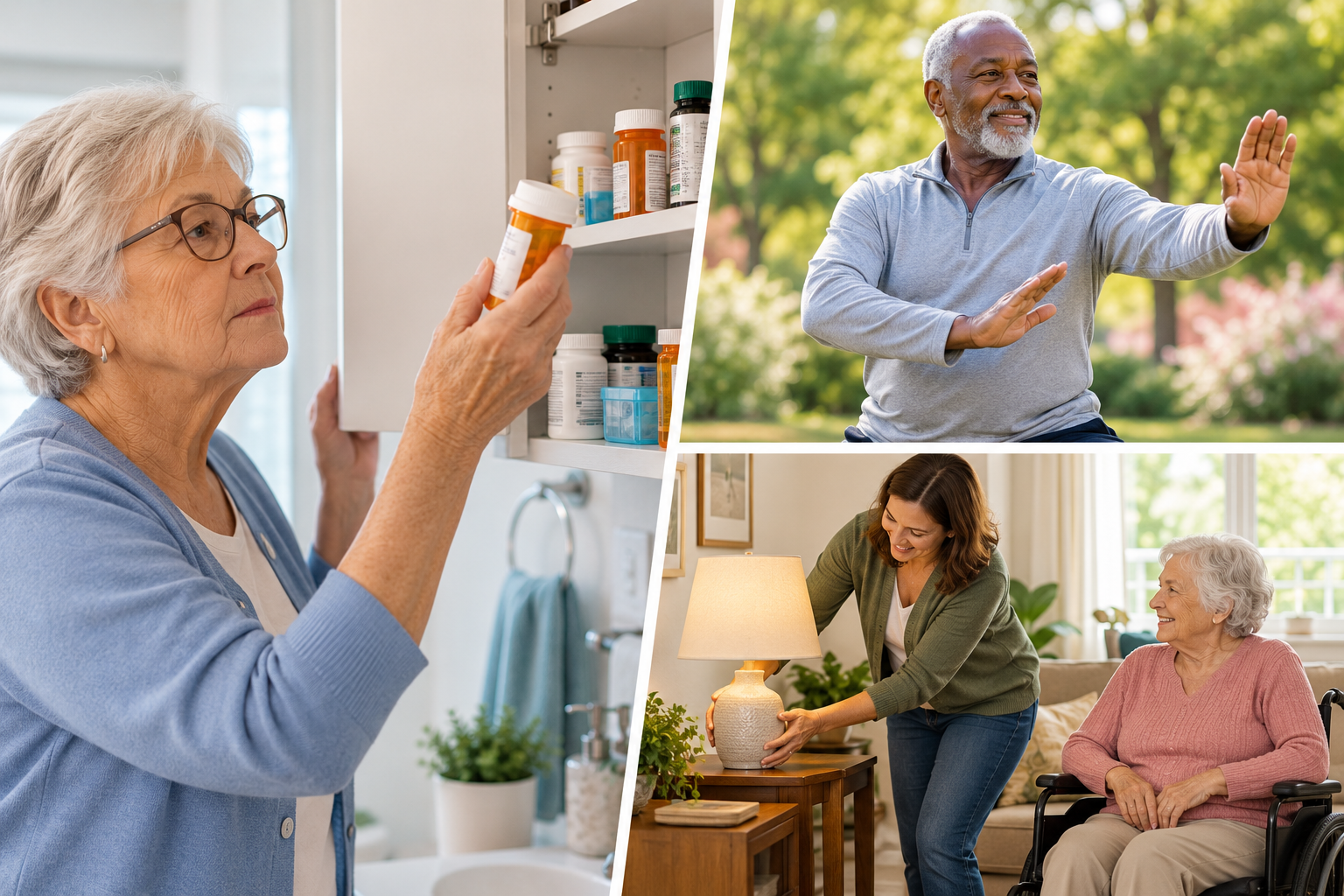
Spring cleaning is a great time to clear out clutter, tackle a few projects, and give your home a fresh start. While you’re at it, why not give your home a safety check, too?
Falls can have serious consequences as we get older, but they are not simply a normal part of aging. According to the National Institute on Aging (NIA), more than one in four adults age 65 and older have a fall each year, yet many falls can be prevented. Staying active, managing medications, and making the home safer are all steps that can help lower your risk.
The good news is that fall prevention doesn’t have to mean making big changes all at once. A few simple adjustments around the house, and a few healthy habits, can help you stay safer, stronger, and more confident on your feet.
Start With a Home Safety Check
Sometimes the biggest hazards are the little things we see every day and stop noticing. Take a walk through your home and look at it with fresh eyes. Is there anything you have to step over, squeeze past or walk around?
Start with floors and walkways. Pick up clutter, move electrical cords out of walking paths and secure or remove loose rugs. Arrange furniture so there is plenty of room to move comfortably from one area to another.
Good lighting is also important. Replace burned-out bulbs and make sure hallways, stairs, bathrooms and entrances are well-lit. Consider adding nightlights along the path between the bedroom and bathroom and keep a lamp or light switch within easy reach of the bed.
Bathrooms deserve a little extra attention. Wet surfaces can be slippery, so use non-slip mats or surfaces in the tub or shower and consider installing grab bars where additional support is needed. Remember, towel racks are designed to hold towels, not body weight.
Check stairs, steps and entrances for loose boards, uneven surfaces or clutter. Make sure handrails are secure and outdoor entrances have adequate lighting. In the kitchen, keep items you use regularly within easy reach so you don’t have to climb on a chair or unstable stool.
Even your shoes can make a difference. The National Institute on Aging recommends nonskid, rubber-soled, low-heeled shoes that provide good support.
Spring Safety Tip: You don’t have to tackle the entire house in one day. Start with one room and look for one or two things you can make safer.
Know How Your Medications Affect You
Your medicine cabinet is another good place for a little spring cleaning, but that doesn’t mean throwing away medications or stopping a prescription on your own.
Some prescription medications, over-the-counter medicines, dietary supplements and even herbal products can cause side effects that may increase the risk of falling. The Centers for Disease Control and Prevention (CDC) encourages older adults and caregivers to keep track of medications and talk with a doctor or pharmacist about possible risks.
Keep an up-to-date list of everything you take, including prescription medications, over-the-counter medicines, vitamins and supplements. Bring the list with you to medical appointments and update it whenever something changes.
Pay attention to how you feel, too. If a medication makes you feel sleepy, dizzy, confused or unsteady, talk with your doctor or pharmacist. Never stop taking a prescribed medication without first talking with your health care provider.
Stay Active to Help Prevent Falls
When someone is worried about falling, being less active might seem like the safest choice. But staying active is actually an important part of preventing falls.
As the National Institute on Aging explains, “staying active is important to keeping your body healthy and actually helps to prevent falls.”
Regular physical activity helps keep muscles strong and joints, tendons and ligaments flexible. Activities that build strength and improve balance are especially helpful for staying steady on your feet. And being active doesn’t have to mean a strenuous workout. Walking and other activities appropriate for your abilities can all help you stay active.
The NIA also recommends balance and strength activities such as Tai Chi, which uses slow, gentle movements to help improve balance and muscle strength.
If you’d like to give Tai Chi a try, the Area Agency on Aging of Southwest Arkansas offers Tai Chi for Fall Prevention through our Mind & Body Wellness programs. Contact us to learn more about current classes.
Fall prevention isn’t about doing less. It’s about making changes that can help you continue doing the things you enjoy safely and confidently.
This spring, think beyond cleaning out closets and clearing off shelves. Clear a walkway. Check the lighting. Review your medications. Find ways to stay active. Small changes today can help you feel safer and more confident at home all year long.
Sources & Additional Information
National Institute on Aging
Falls and Fractures in Older Adults: Causes and Prevention
Centers for Disease Control and Prevention
Medicines Risk Fact Sheet